





Adult weight loss
Here’s some advice, videos and tools to help you lose weight.
However, you’re far more likely to succeed with some extra guidance and support – click here to find out about our free and friendly adult weight management services.Call us now on 01473 22 92 92 or contact us via other means by clicking here
Use the panel above to download the NHS 12-week weight loss plan and start your weight loss journey.
The plan, which has been downloaded more than 2 million times, is designed to help you lose weight safely – and keep it off.
If you're overweight, losing weight will bring you a range of important health benefits.
The key to success? Making realistic changes to your diet and level of physical activity that can become a part of your daily routine.
Evidence shows that the best way to lose weight is to make long-term changes to diet and physical activity that result in a steady rate of weight loss. Aim to lose weight at around 0.5kg to 1kg a week (1lb to 2lb), until you achieve a healthy BMI
Below are some helpful tips to start your journey towards a healthy weight. Once you’re on the way, there is lots of information and advice that can help you keep going in our Lose weight section.
Along the way, you can monitor changes in your body mass index (BMI) using our Healthy weight calculator.
Commit to change
Modern life can make it easy to eat and drink more than we realise and do little physical activity. The result is often weight gain.
To lose weight, we need to change our current habits. This means eating less – even when eating a healthy, balanced diet – and getting more active.
Drastic fad diets and exercise regimes that result in rapid weight loss are unlikely to work for long, because these kinds of lifestyle changes can’t be maintained. Once you stop the regime, you’re likely to return to old habits and regain weight.
Instead, choose diet and physical activity changes that you can make a part of your daily routine, and stick to for life.
Ready to get started?
Do today
You can take five actions today that will start your journey towards a healthy weight:
- Download the NHS Choices weight loss plan, a 12-week diet and exercise plan designed to help you lose weight healthily and keep it off.
- If you haven’t already, check your BMI with our healthy weight calculator. If you need to lose weight, you will be given a calorie range to stick to.
- Now take the next snack you plan to have and swap it for something healthier. Go for a piece of fruit, a fruit bun or a slice of malt loaf with a low-fat spread. Aim to do the same every day: you’ve adopted your first weight loss habit. Try these 100-calorie snacks.
- Try to swap drinks that are high in calories for drinks that are lower in fat and sugars. Swap a sugary fizzy drink for a sparkling water with a slice of lemon. Don't forget that alcohol also contains calories, so cutting down could help you to control your weight.
- Next, find a way to fit just one extra walk into your day. Fast walking is a way to burn calories, and you can often fit it into your daily routine. You might walk to the shops during your lunch break, or get off the bus one stop early on the way home and walk the rest of the way. Commit to this and you’ve adopted your second long-term habit. Ideally, you should aim to walk 10,000 steps a day: it’s not as many as it sounds. Learn more in walking for health.
- Last, think about your breakfast tomorrow morning. Can you make it healthier, using the foods you already have at home? Get ideas in healthy breakfasts (for people who hate breakfast).
Do this week
There are four actions you can take this week:
- Plan a healthy weekly shop. Healthy, balanced meals are key to a healthy weight, and eating a balanced diet often starts with having the right foods at home. At the supermarket look out for fresh foods and healthier options. Stuck for ideas? See our healthy recipes.
- Everyone likes a treat occasionally, like a pizza or a takeaway. So this week, swap your treat for a healthier, home-made alternative as you can make lower-calorie versions of many takeaway foods at home. If you do order in, choose healthier options: see healthier takeaways.
- Next, commit to one more way to increase your level of physical activity. The right amount of physical activity for you depends on your age. It’s recommended that adults between 19 and 64 get at least 150 minutes of moderate-intensity aerobic physical activity – such as fast walking or cycling – per week, and you are likely to need more to lose weight. For more on how much activity to do and what counts as activity, see physical activity guidelines for adults. You could try our Couch to 5K running plan or our Strength and Flex workouts. For more ideas see our health and fitness section and our step-by-step exercise guides for beginners.
- Last, identify this week’s danger zones. These are times when you might find yourself eating lots of foods that are high in fat and sugar, perhaps because you are eating out or simply because you’re tired or stressed. Plan ahead, so that you can limit those foods. But don’t be too strict: an indulgence from time to time is fine. For more advice, see diet danger zones.

Body mass index (BMI) is a good way to check if you're a healthy weight. Use our healthy weight calculator to find out your BMI, and get helpful information and advice.
For adults, BMI is a measure of whether you're a healthy weight for your height.
For children aged two and over, BMI centile is used. This is a measure of whether the child is a healthy weight for their height, age and sex.
If you have a BMI above the healthy range you are at raised risk of the serious health problems linked to being overweight, such as type 2 diabetes, heart disease and certain cancers. In children, BMI centile indicates whether the child is a healthy weight.
You can go straight to information on:
Who can use BMI and BMI centile?
BMI is the best assessment of weight in adults, and BMI centile is the best assessment for children aged two and over.
Some adults who have a lot of muscle may have a BMI above the healthy range. For example, professional rugby players can have an "obese" BMI result despite having very little body fat. However, this will not apply to most people.
BMI for adults
BMI takes into account that people come in different shapes and sizes. That's why a range of BMIs is considered healthy for an adult of any given height.
A BMI above the healthy range indicates that you're heavier than is healthy for your height.
The ranges below only apply to adults. BMI results are interpreted differently for children.
- BMI below 18.5: a score this low means that you may be underweight. There are a number of possible reasons for this. Your GP can help you find out more, and achieve a healthy weight.You can learn more by reading Nutrition for underweight adults.
- BMI between 18.5-24.9: this is a healthy range. It shows that you're a healthy weight for your height. However, it's still important to eat a healthy, balanced diet and include physical activity in your daily life if you want to maintain a healthy weight.
- BMI score of 25 or more: your BMI is above the ideal range and this score means you may be overweight. This means that you're heavier than is healthy for someone of your height. Excess weight can put you at increased risk of heart disease, stroke and type 2 diabetes. It’s time to take action. See the section below for the next step, and learn more in our Lose weight section.
- BMI of 30 or more: a BMI above 30 is classified as obese. Being obese puts you at a raised risk of health problems such as heart disease, stroke and type 2 diabetes. Losing weight will bring significant health improvements, and your GP can help. See the section below and learn more in Lose weight.
Ethnicity, BMI and diabetes risk
New BMI advice was issued in July 2013 by the National Institute for Health and Care Excellence (NICE) to south Asian and Chinese adults, who have a higher risk of developing type 2 diabetes than white populations. These groups are advised to maintain a BMI lower than the standard 25.
The advice is:
- BMI of 23: Asians with a BMI score of 23 or more are at increased risk of developing type 2 diabetes.
- BMI of 27.5: Asians with a BMI of 27.5 or more are at high risk of developing type 2 diabetes.
Although the evidence is less clear-cut, black people and other minority groups are also advised to maintain a BMI below 25 to reduce their risk of type 2 diabetes.
If you're overweight
If your BMI shows that you're overweight or obese it's time to take action. There’s lots of information, advice and support on NHS Choices that can help you.
- Lose weight has information and advice on achieving a healthy weight
- Food and diet contains information and advice on healthy eating
- Health and fitness is full of fun and practical ideas to help you get into shape
Your GP or practice nurse can also offer advice on lifestyle changes, and may refer you to a weight loss group or discuss other treatments. Find out more in How your GP can help.
They may also measure your waist circumference. This can provide further information on your risk of certain health conditions, such as type 2 diabetes and heart disease. You can learn more by reading Why body shape matters.
Why lose weight?
For adults who are overweight or obese, losing even a little excess weight has health benefits. You’ll lower your risk of serious health problems such as heart disease, stroke, high blood pressure and type 2 diabetes.
Weight loss can also improve back and joint pain. Most people feel better when they lose excess weight.
The key is to make small, long-lasting changes to your lifestyle. If you are overweight or obese, changing your lifestyle so that you eat fewer calories can help you to become a healthier weight. Combining these changes with increased physical activity is the best approach.
To start with, you can cut down on excess calories by swapping high-calorie meals and snacks for healthier alternatives. Read Healthy food swaps to learn more.
Physical activity is an important part of losing weight, as long as it is combined with eating fewer calories. The amount of physical activity that is recommended depends on your age. Adults aged between 19 and 64 should get at least 150 minutes of moderate-intensity aerobic physical activity – such as fast walking or cycling – a week. Adults who are overweight are likely to need to do more than this to lose weight. If it's been a while since you've done any activity you should aim to build up to this recommendation gradually. Find out more in Benefits of exercise.
For more ideas on how to get you and your family active, visit Change4Life.
Height and weight chart
You can also use the height and weight chart to check if you're a healthy weight for your height. The chart is only suitable for adult men and women.
BMI for children
BMI results are interpreted differently for children.
When interpreting BMI for a child, health professionals look at a child's weight in relation to their height, age and sex. The result is called the child’s BMI centile. BMI centile is a good way of telling whether a child is a healthy weight, and is used by healthcare professionals.
Using your child’s BMI centile, a healthcare professional can tell whether they're growing as expected. You may have done something similar when your child was a baby, using the growth charts in the Personal Child Health Record ("red book").
Once your child’s BMI centile has been calculated, they will be in one of four categories:
- underweight: below 2nd BMI centile
- healthy weight: between the 2nd and 90th BMI centile
- overweight: between 91st and to 97th BMI centile
- obese: at or above 98th BMI centile. This BMI centile category is called "very overweight" in letters that are sent by the National Child Measurement Programme.
Most children should fall in the healthy weight range. A BMI at or above the 91st centile is likely to indicate your child has an increased risk of obesity-related health problems.
Some medical conditions or treatments may mean that BMI centile is not the best way to measure whether your child is a healthy weight. Your GP or other health professional can discuss this with you.
If your child is overweight
Research shows that children who are overweight or obese have a higher risk of ill health during childhood and in later life. If your child is overweight, it’s time to take action.
A GP or practice nurse can give advice and support on helping your child achieve a healthy weight as they grow. Find out more in When your child is overweight.
If you've achieved your target weight, well done! But don't undo all the good work by reverting to old habits.
The effects of quick-fix diets often don't last, as many people fall back into old eating and activity habits after the weight is lost. If you find your weight is going back up again, it's time to take action.
How to keep weight off
The key to reaching your ideal weight and keeping the weight off is to make long-term changes to your diet and lifestyle that you can stick to for life.
The following tips are likely to help keep weight off:
- Stick to lower-calorie eating. A lower-fat, higher-protein diet has been shown to help maintain weight loss for some people. This could be because protein-rich meals make you feel fuller more quickly, making you less likely to snack between meals.
- Plan ahead. Maintain your healthier eating habits regardless of changes in your routine, such as eating out, weekends or holidays. By planning ahead, you're less likely to slip up.
- Eat breakfast. Research shows that breakfast can help people control their weight. Having breakfast can help you avoid getting too hungry and snacking later on.
- Stay active. Build up your physical activity levels – if you've already been walking regularly, think about walking for longer, or start running.
- Watch your weight. Weigh yourself regularly so you can keep a close eye on any changes to your weight.
- Get support. If you have talked to a health professional about your weight in the past, make sure you go back regularly to get support from them.
- Keep it interesting. Variety is the spice of life, so if you feel yourself slipping back into old ways, mix things up a bit. Buy a new healthy cookbook, sign up for a healthy cooking course or try a new activity.
- Set yourself goals. These can help motivate you into keeping up your healthy diet and exercise regime. For example, is there a special occasion coming up that you want to feel your best for?
What should I eat now?
As a guide, the average man needs about 2,500 calories and the average woman needs 2,000 calories a day to maintain their weight. If you've been eating a lower calorie diet and you've now reached a healthy weight, you may want to increase your calorie intake. But do it by small amounts to avoid putting on weight again and remember to keep active.
More weight to lose?
"When we look at people who lose weight successfully, the lessons are clear," says Dr Andrew Brewster, a GP with a special interest in obesity and weight management. "A combination of diet changes and changes to their level of physical activity is the best method. The key is making small changes that you can keep for life, rather than drastic changes that you only stick to for a few weeks.
"You don't need to achieve a healthy weight overnight. Losing even a few kilos can make a huge difference to the health of someone who is overweight."
You can check the weight range that is healthy for you by using our Healthy weight calculator. Set a realistic target. Give yourself enough time to work towards your goal – the safe rate of weight loss is between 1lb and 2lb (0.5kg and 1kg) a week.
Download the new NHS 12-week weight loss guide.
Healthy food swaps
To start, you might decide to swap just one high-calorie snack a day with something healthier. For example, you could have a smoothie or a piece of fruit instead of a morning pastry. Or you could choose a drink that's lower in fat, sugar or alcohol and therefore contains fewer calories. For example, you could swap a sugary, fizzy drink for sparkling water with a slice of lemon.
You can learn more about small, healthy changes to your diet by reading Healthy food swaps. On the whole, eating less while maintaining a balanced diet and being more active will keep the weight off.
You can also find lots of information on eating a healthy, balanced diet in Food and diet.
Exercise
When it comes to physical activity, find ways to fit more movement into your day. It's recommended that adults between 19 and 64 get at least 150 minutes of moderate-intensity aerobic physical activity – such as fast walking or cycling – every week. If you are new to activity you should try to build up to this amount gradually. For more information, see Physical activity guidelines for adults.
Being physically active is an important part of a healthy lifestyle. People who do regular activity have a lower risk of many chronic diseases, such as heart disease, type 2 diabetes, some cancers and stroke.
There's more information and advice on getting active in Fitness.
Stick to the changes
Once you've identified the lifestyle changes you want to make, give yourself time to make them part of your life.
At some point, the weight loss that results from these changes will stop and your weight will stabilise. But it's important to remember that if you want to maintain your new, healthier weight, you need to stick to the changes.
"This is where many people slip up," says Dr Brewster. "They feel as though the changes they've made 'aren't working any more', and so they go back to old habits. In fact, the changes are working, as they are keeping you at your new weight. If you let go of them, you'll put weight back on.
"Really get those changes set into your lifestyle. Once you've done that and your weight has stayed the same for a while, if you're still not a healthy weight you can think about another set of small changes.
"That's the step-by-step method that will give you the best chance of achieving a healthy weight long term."
So much is said about losing weight that it can be hard to sort fact from fiction. Here's the truth about 10 common weight loss myths.
1. Starving myself is the best way to lose weight
Crash diets are unlikely to result in long-term weight loss. In fact, they can sometimes lead to longer term weight gain. The main problem is that this type of diet is too hard to maintain. Your body will be low on energy, causing you to crave high-fat and high-sugar foods. When you finally give in and eat those foods, you will often eat more calories than you need, causing weight gain. Learn more about a healthy diet in Eight tips for healthy eating.
2. A radical exercise regime is the only way to lose weight
Not true. Successful weight loss involves making small changes that you can stick to for a long time. That means building regular physical activity into your daily routine. Adults between 19 and 64 should get at least 150 minutes of physical activity – such as fast walking or cycling – every week, and those who are overweight are likely to need more than this to lose weight. To lose weight, you need to burn more calories than you consume. This can be achieved by eating less, moving more or, best of all, a combination of both. Try the 12-week NHS weight loss plan.
3. Slimming pills are effective for long-term weight loss
No, they're not. Slimming pills alone will not help you keep the weight off long term. They should only be used when prescribed by a doctor.
4. Healthy foods are more expensive
In fact, healthy foods are not necessarily more expensive than their unhealthy alternatives. You'll typically pay more for a high-fat, high-salt ready meal than you would if you had bought fresh ingredients and made the meal yourself.
5. Foods labelled 'low fat' or 'reduced fat' are always a healthy choice
Be cautious. Foods labelled "low fat" have to meet legal criteria to use that label. Labels such as "reduced fat" do not have to meet the same criteria and can be misleading. A reduced-fat snack should contain less fat than the full-fat version, but that doesn't automatically make it a healthy choice: it could still contain a lot more fat than, say, a portion of fruit. Low-fat foods also sometimes contain high levels of sugar. Learn more in Fat: the facts.
6. Margarine contains less fat than butter
Margarine and butter contain different types of fat. Margarine is usually lower in saturated fat than butter. But it's more likely to contain hydrogenated fats. Hydrogenated fats, also called trans fats, may be more harmful to health than saturated fats. To lose weight, and for a healthy heart, reduce the amount of saturated and hydrogenated fats you eat. If oil in margarine has been hydrogenated, this has to be listed on the ingredient listing on packaging, so check labels carefully. Learn more in Eat less saturated fat.
7. Carbohydrates make you put on weight
Eaten in the right quantities, carbohydrates will not cause weight gain. A 2003 study published in the New England Journal of Medicine concluded that dieters on the best-known low-carb diet, the Atkins diet, tended to lose weight not because they ate fewer carbohydrates, but simply because they ate less overall. Eat whole grain and wholemeal carbohydrates such as brown rice and wholemeal bread, and don't fry starchy foods when trying to lose weight. Learn more in Starchy foods.
8. Cutting out all snacks can help you lose weight
Snacking isn't the problem when trying to lose weight: it's the type of snack. Many people need a snack in-between meals to maintain energy levels, especially if they have an active lifestyle. Choose fruit or vegetables instead of crisps, chocolate and other snacks that are high in sugar or saturated fat.
9. Drinking water helps you lose weight
Water does not cause you to lose weight, but it does keep you hydrated and might help you snack less. Water is essential for good health and wellbeing. Sometimes thirst can be mistaken for hunger – if you're thirsty you may snack more. The Department of Health recommends that we should drink about 1.2 litres of fluid every day. Learn more in Water and drinks.
10. Skipping meals is a good way to lose weight
Skipping meals is not a good idea. To lose weight and keep it off, you have to reduce the amount of calories you consume or increase the calories you burn through exercise. But skipping meals altogether can result in tiredness and poor nutrition. You will also be more likely to snack on high-fat and high-sugar foods, which could result in weight gain.
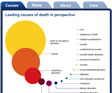 NHS Atlas of Risk (tool)This atlas will help you to put health risks and death rates into perspective. Use it to compare cause of death and risks to health based on sex, age and region.
Back